Do you actually need portion control… or is your food forcing you to use it?
Apr 08, 2026Might sound like a strange question.
It's not. 😉
For a long time, you've probably assumed that portion control is just part of the deal.
That staying lean means staying "on top of it."
Watching quantities and keeping yourself in check.
So when you catch yourself thinking, "I can only maintain my weight when I'm carefully controlling every bite," it feels like a personal limitation.
Like this is just how your body works.
But what if that's not the real issue?
What I've seen over and over again is this:
Women who eat well… who choose whole foods… who are disciplined and consistent…
…still feel like they have to manage, limit, and monitor their food just to stay where they are.
And the reason is much simpler than it looks.
It's not that there's something wrong with your appetite.
It's that your meals are still too concentrated.
When the foods you're eating pack a lot of calories into a relatively small amount of food, your body doesn't get a strong enough signal that it's had enough before you've already eaten more than it needs.
So you end up in this quiet negotiation with yourself.
You finish a meal, and instead of feeling clearly done, you're thinking:
"Should I stop here?",
"Do I need to be careful for the rest of the day?"
And at that point, portion control steps in.
Not as a strategy… but as a backup system.
Because your body didn't get the chance to regulate things naturally.
This is why portion control feels so tiring.
You're doing manually what your biology is designed to do automatically.
And even if you're eating whole foods, this still happens all the time — because "whole foods" doesn't automatically mean your meals are structured in a way that supports natural appetite regulation.
Foods like eggs, chicken, salmon, olive oil, avocado, nuts, nut butters… or flour-heavy foods like bread and pasta without enough bulk behind them… can still be very calorie-dense for their size.
So you can eat what looks like a reasonable portion, but your body hasn't had enough physical volume of food to fully register that it's done.
You've taken in plenty of energy… but you're not properly full.
That mismatch is what creates the need for control.
Fast forward to when meal structure actually changes… and what I now know is that this one shift changes the entire equation. 😂
There's a specific way it works, though.
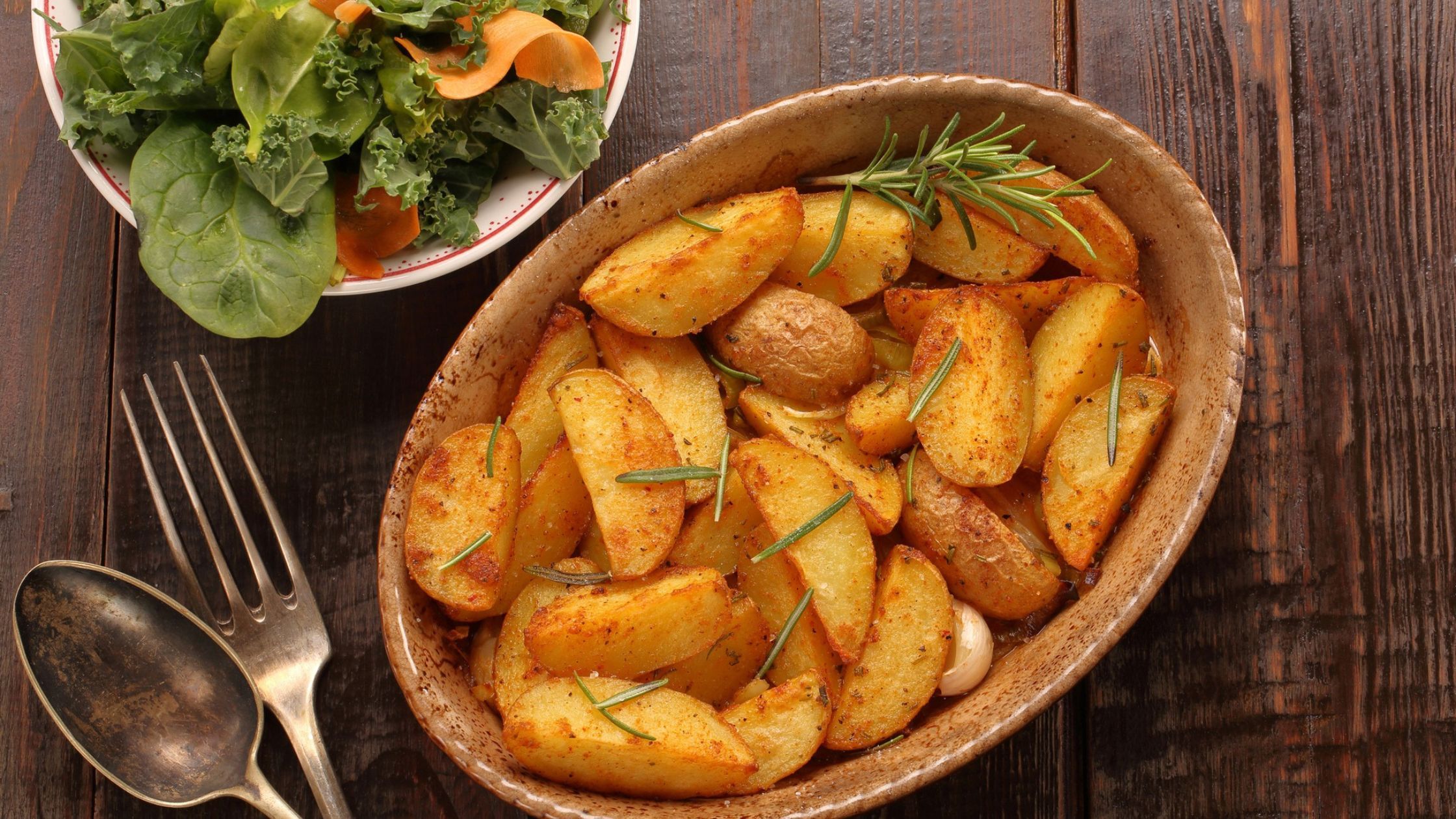
When about 70–80% of your plate is made up of unprocessed starchy foods — potatoes, rice, oats, beans, lentils — the calorie concentration drops and the volume goes up (Step One in the Nasrawy Method).
The rest of the plate is supported by fruits, vegetables, and smaller amounts of richer foods used strategically.
Now instead of eating a small amount of concentrated food… you're eating a large, satisfying amount of food that actually fills your stomach and sends a clear signal that you've had enough.
No tracking or "being careful."
Just a clear signal that the meal is over.
When people first hear this, I often get:
"But portion control works. I've done it before."
And that's true — it works as long as you're willing to keep doing it.
But the moment your attention slips — travel, stress, social events, a busy week — the whole thing becomes unstable again.
Because nothing underneath has actually changed.
Once the structure of your meals changes, though, the whole experience of eating changes with it.
Hunger drops.
Meals keep you full for hours and weight starts to move in a steady, predictable way — without you having to constantly step in and manage it.
That's when you start to feel what most people haven't felt in years: trust in your appetite again.
This is Step 1 of the Nasrawy Method, and it's a big part of what I work through with clients in my 1:1 private intensive.
We look at your current setup, find the specific places where calorie concentration is quietly working against you, and rebuild it into a personalized Nutrition Blueprint that holds in real life — whether you're at home, traveling, eating out, or in a busy week.
Most of my clients see their hunger drop quickly, their meals start to genuinely satisfy them, and their weight come down in a steady, predictable way — often around 0.5–3.7 lbs per week, depending on the individual.
If you'd like to explore whether this kind of work would make sense for you, email me at [email protected] and we can have a conversation to see if you're a good fit.
Zaina Nasrawy.