Are you dealing with "sensitive digestion"… or are your meals built in a way that makes digestion feel heavy?
Apr 08, 2026Over the years I've had many women come to me with their digestion struggles.
And it usually comes out of them in exactly that way: "I eat really clean… but my digestion just feels off."
It was only after working with a lot of these women that I realized I should have been asking a very important follow-up question:
"Is your digestion actually sensitive — or are your meals structured in a way that makes digestion feel heavy in the first place?"
Those are actually two very different problems.
The first one — actually having a sensitive digestive system — can happen. And it's not something that simple food changes can really fix.
It's a medical issue, usually an individualized one, that requires proper clinical attention.
But here's what I've found after working closely with a lot of women who were convinced this was their problem:
Most of the time… it isn't.
Now let's look at the other kind of digestion problem — the one where your meals are built in a way that makes digestion feel heavy.
That's the problem I can actually solve. 😉
It's the problem that comes from eating what looks, on paper, like a perfectly clean diet — chicken, salmon, eggs, big salads with olive oil and avocado — yet still feeling bloated after meals, still feeling that heavy "food sitting" sensation, still finishing a meal and feeling full but not comfortably full.
Yep. That's what I work on. 😀
Here's the key insight: this is a food structure problem, not a gut problem.
These meals are dense, low in fiber, and high enough in fat that your body has to rely heavily on bile-based chemical processing rather than the kind of simple, smooth mechanical movement that makes digestion feel easy and complete.
Bile is released from the gallbladder into the small intestine, where it breaks big blobs of fat into tiny pieces, so your body can actually get in there and break them down properly.
Even when the food is ‘clean’, ‘high-quality’, and portion-controlled — if it's built around animal proteins and added fats, you're asking your digestive system to do the job the hard way.
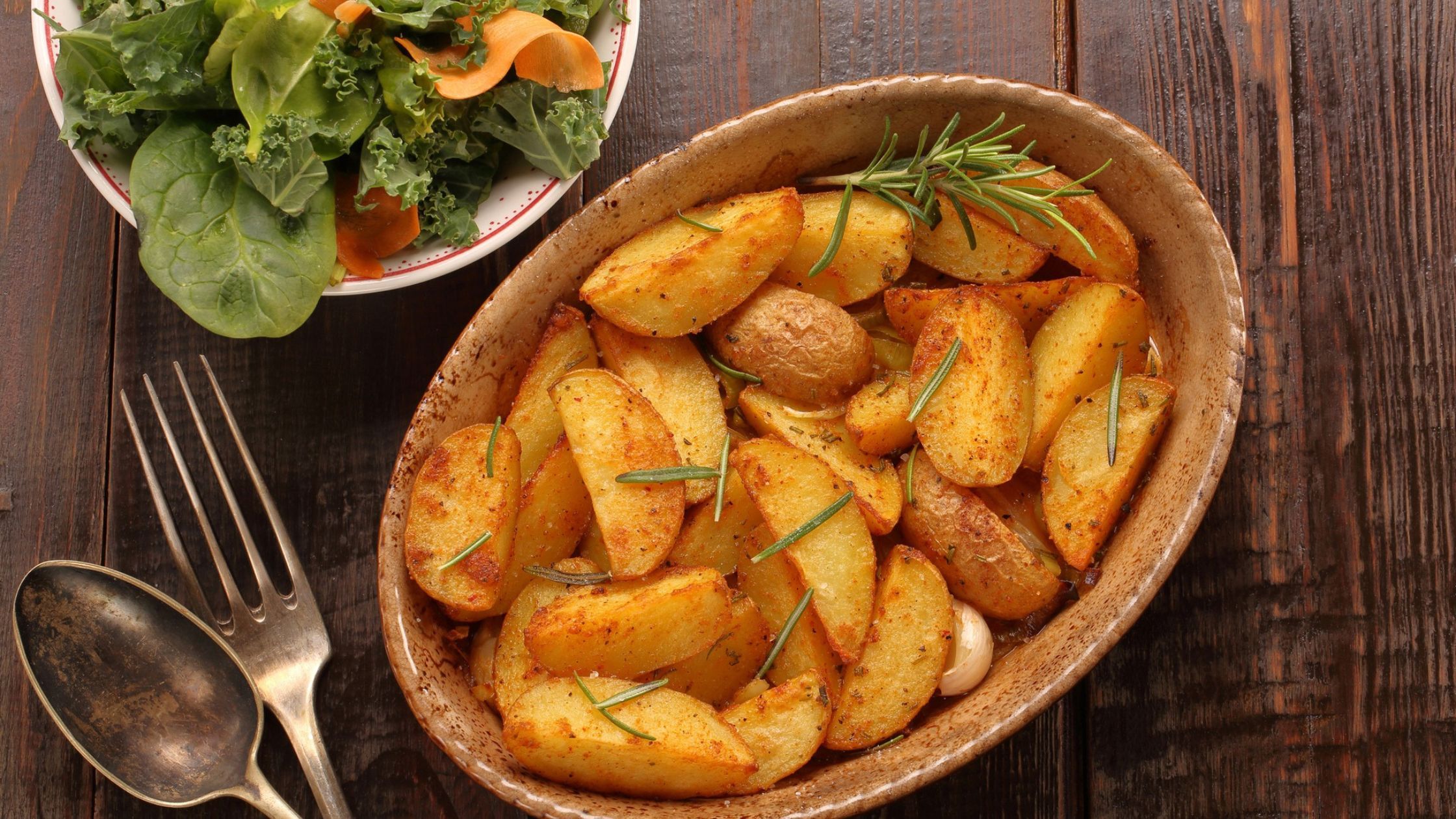
Compare that to meals built around potatoes, rice, oats, beans, corn, fruit, and vegetables. Now you have far more volume, far more fiber, and far less fat — which means digestion becomes mechanical and complete instead of chemical and heavy.
This is why you can feel full but not satisfied, and still uncomfortable.
It's not that there’s something wrong with your body. It's that your meals are asking your digestive system to work harder than it needs to.
The Nasrawy Method solves this problem by centering your plate around starchy carbs (Step 1), and by eliminating or significantly reducing animal foods (Step 4).
Now, someone might say: "But I feel good eating lighter, protein-based meals."
And I get that. I really do.
Because those meals feel controlled and structured and ‘healthy’. But feeling disciplined is not the same as your physiology working smoothly. If digestion feels heavy or incomplete after most meals — that's feedback. And it's not random.
My point in saying all this is to empower you.
To help you see that so much of the answer to "digestion problems" lies not in your gut — but in your food structure. And to make you very wary of spending time and money on gut protocols and elimination diets when the real issue is simply how your meals are built.
In the meantime, if you're someone who's eating well, doing everything right, and still dealing with that heavy, unsettled feeling after meals — you might love working with me 1:1 in my private two-week intensive.
In that program, I look at exactly how your meals are currently structured, identify the precise mismatch that's creating that heavy, uncomfortable feeling, and fix it — so your meals keep you full for hours, feel light and complete after eating, and support steady, predictable weight loss.
We also build your personalized Nutrition Blueprint and work through the real-life friction points that usually get in the way of consistency, so this way of eating actually holds without you having to manage it.
Past clients of this program have seen 15–40+ pounds come off over time and stay off — and have said that the shift in how their meals were structured was the thing that finally made weight loss feel effortless and permanent, instead of something they had to constantly manage and restart.
For the right person, it's a complete turning point — and a total steal, too.
Send me a message if you're interested and we'll chat to see if it's a fit.
Zaina Nasrawy.