If you feel like your portions always have to stay small to maintain your weight, it’s usually not an appetite problem.
Apr 08, 2026A lot of health-conscious women I come across are doing everything "right" - clean meals, good proteins, plenty of vegetables - and yet they know, from years of experience, that the moment portions get generous, the scale moves.
So they've quietly made peace with keeping things modest.
Small plates, stopping before they're full.
And it's not that there's something wrong with their appetite or that it's unusually large.
It's that the foods anchoring their meals are working against one of the body's most basic fullness mechanisms - before they even finish eating.
Your stomach has stretch receptors.
Their whole job is to measure volume - how much physical space food is taking up - and send a signal to the brain that says "okay, we're good."
It's one of the most fundamental appetite-regulation systems humans have.
But it only works when the food you're eating gives the stomach enough bulk for the calories it contains.
Animal foods - chicken, fish, eggs, cheese - do the opposite.
They pack a significant calorie load into a small physical volume.
So your stomach hasn't stretched enough to feel full yet, but you've already taken in more calories than you realize.
The brain gets a confusing message, and most people adapt the only way they can - they keep portions small, they stop eating when the plate "looks right," and they rely on discipline and portion control instead of actual hunger signals.
This is where a lot of otherwise very disciplined women get stuck for years, because the foods they've built their meals around are quietly working against them.
This is exactly what Step 4 of the Nasrawy Method addresses - eliminating animal foods, or reducing them to a very small supporting role.
And this is not done for ideological reasons.
It's simply done because removing them allows the body's natural fullness signaling to start working properly again.
When that happens, the center of the meal shifts to what Step 1 of the Nasrawy Method is built around - unprocessed starchy carbohydrates.
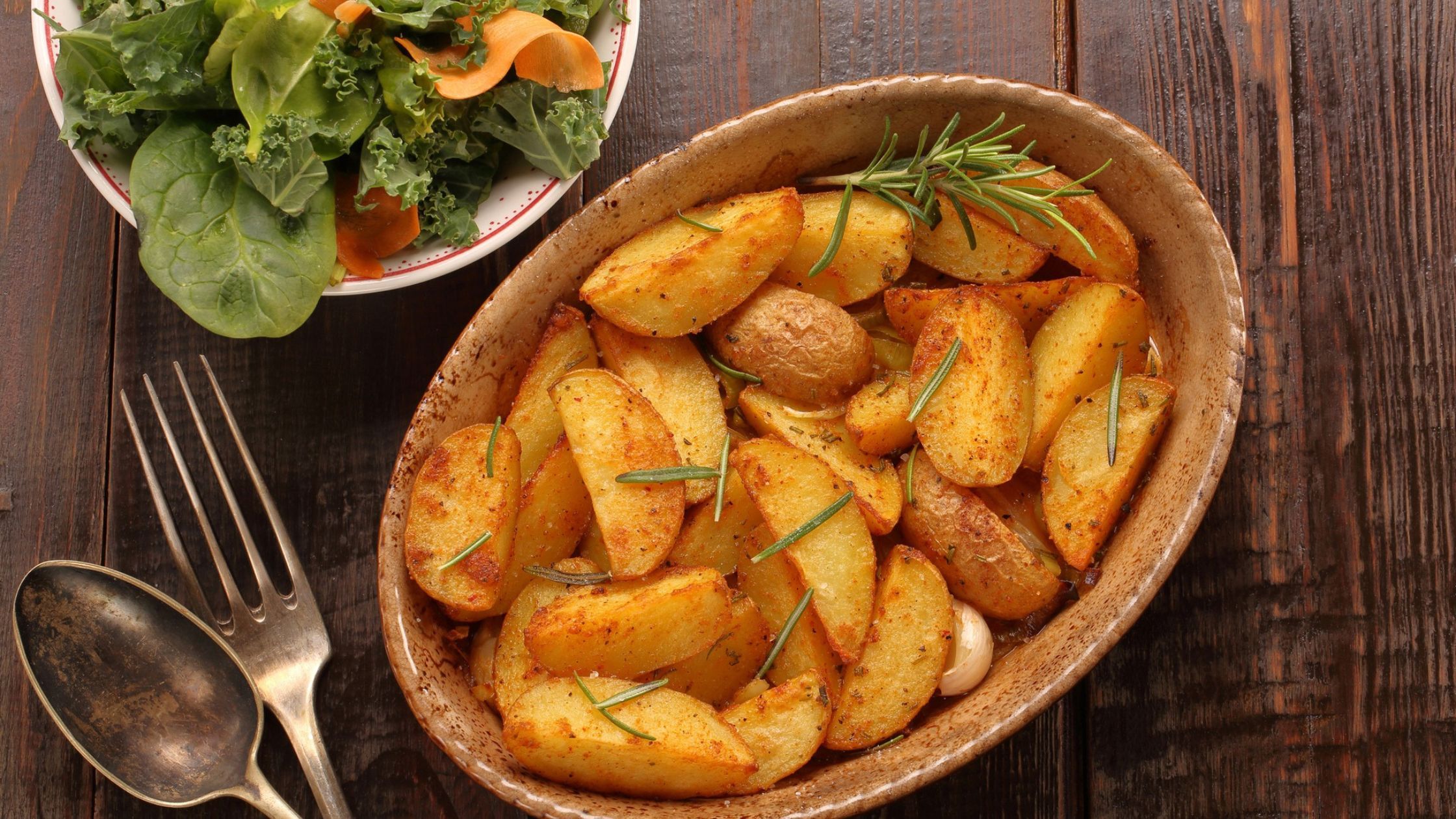
Potatoes, rice, oats, beans, lentils.
Foods that are high in water and intact fiber, which means they take up significantly more physical space for the same number of calories.
The stomach expands.
The stretch receptors do their job.
The brain gets a clear, clean signal that you've had enough - and you actually feel it, rather than just deciding it's time to stop.
This is why people can eat large, genuinely satisfying meals built around starchy carbs and maintain a healthy weight without the constant monitoring.
The stomach is doing what it evolved to do.
And once that mechanism is working again, meals don't have to stay small anymore.
Fullness arrives naturally, on its own, without you having to manage it. And when that happens, it’s much easier to maintain weight loss long term, because you’re no longer hungry 🙂
If you've always assumed that keeping portions modest is just the price you pay for staying lean - even while eating very healthy food - it may simply be that your meals are anchored around foods that concentrate calories before your stomach gets the chance to tell you you're full.
That's a very specific, correctable problem.
And it changes things considerably once it's corrected.
In my 1:1 private Weight Loss & Nutrition Intensive, I work through your current eating pattern using the Nasrawy Method, find exactly where your satiety signaling is being disrupted, and build a personalized Nutrition Blueprint that lets your body regulate weight naturally again - without portion control, without vigilance, without keeping things small just to stay even.
The investment is $20K.
If that level of precision and permanence sounds like what you've been looking for, send me an email at [email protected] and we'll start the conversation.
Zaina Nasrawy.