To stop tracking calories (and still lose weight), fix the calorie density of your meals, not your discipline.
Apr 09, 2026They're eating clean. They're weighing portions. They're hitting their numbers. And still — the only thing standing between them and chaos is the app on their phone.
Here's a question worth sitting with:
If your meals were actually working with your body… why would you need to supervise them so closely?
Most women assume the answer is some version of:
"I just need to be more consistent." "I need to tighten things up." "I need to stick to my calories."
But that's not actually what's happening.
You're not stuck because you lack discipline.
You're stuck because your meals are built in a way that requires control to function.
The core issue comes down to one thing: calorie density.
Your body relies heavily on volume to regulate how much you eat. When food fills your stomach, it stretches it — and that stretch is one of the primary signals your brain uses to register fullness.
But when your meals are built around foods that pack a lot of calories into a small amount of space, that signal arrives too late.
And this is where most women get misled.
Because they are eating whole foods. Their meals look like this:
Eggs or yogurt for breakfast. Chicken or salmon on a salad for lunch. Something "light" with avocado, olive oil, or nuts.
All clean. All "healthy." But still relatively calorie-dense.
So you eat a normal-looking portion, hit your calorie target — and your stomach still hasn't stretched enough to fully shut down hunger. You've "eaten enough" on paper. But your body isn't satisfied.
And tracking becomes the only thing holding it all together.
That's why it feels so exhausting. You're not just logging food. You're manually managing something your body isn't being given the conditions to regulate on its own.
This is exactly why T. Colin Campbell, the legendary nutritional biochemist, emphasizes calorie density over calorie counting.
Calorie counting tries to control the outcome. Calorie density fixes the reason the outcome is unstable in the first place.
Put that in your pipe and smoke it! 😉
Inside my work, this is where Steps 1, 4, and 5 of the Nasrawy Method come together.
Step 1: Build your meals around unprocessed starchy foods (about 70–80% of your plate)
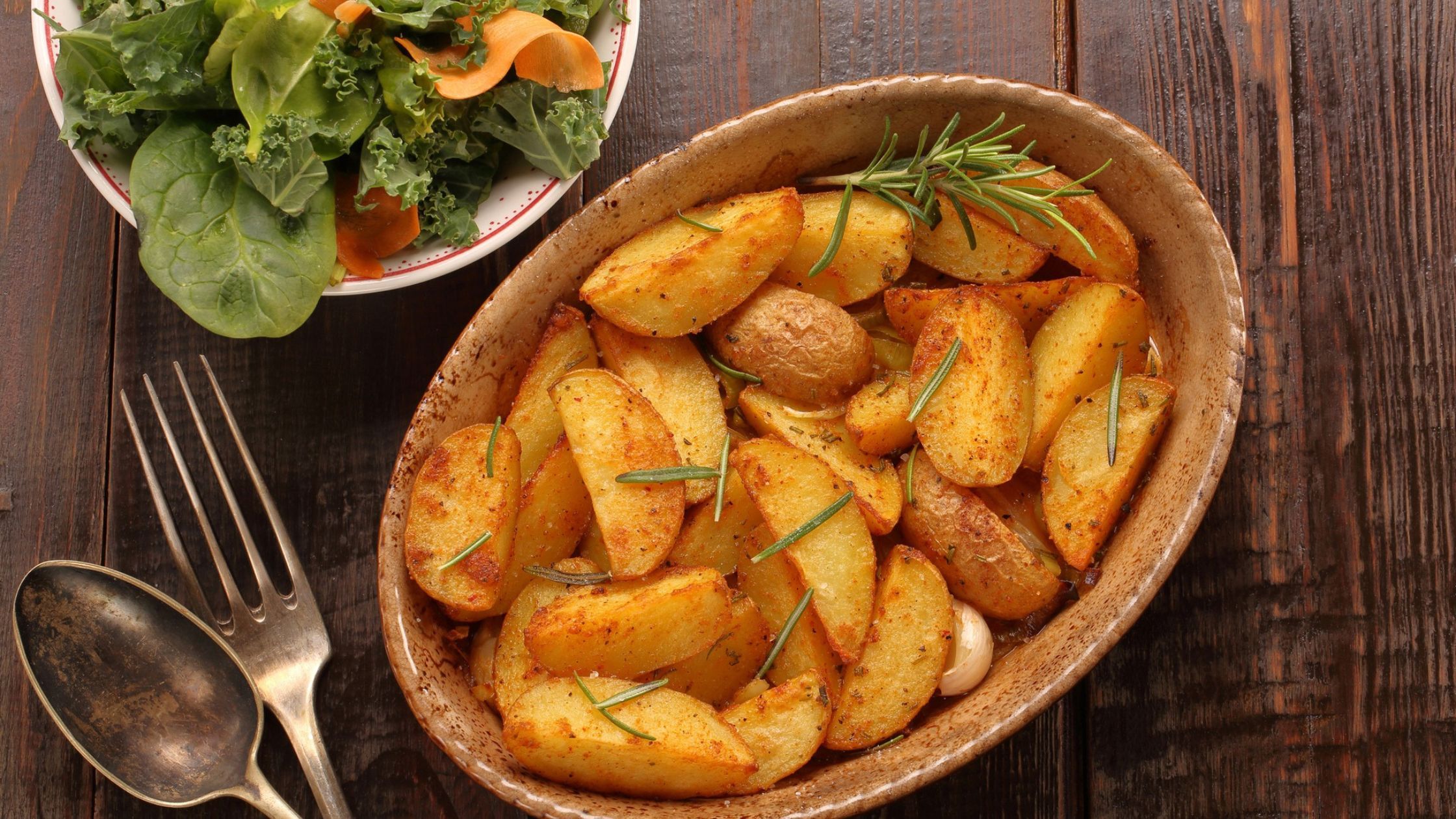
Potatoes, rice, oats, beans, corn, sweet potatoes. These bring in a lot of volume for the calories — which means your stomach stretches properly, and fullness arrives on time.
But here's the part most women miss entirely.
If you keep layering calorie-dense foods on top of that base, you undo the whole effect.
Step 4: Remove (or significantly reduce) animal foods
Chicken, salmon, eggs, cheese, beef. Even the "lean" versions concentrate calories into a smaller volume than starches do — so they quietly erode how effective your fullness signal actually is.
Step 5: Remove high-calorie-density plant foods during weight loss
Oils, nuts, seeds, large amounts of avocado. These are the biggest disruptors. A drizzle of olive oil. A handful of nuts. A spoon of almond butter. Small in size — but they shrink the volume-to-calorie ratio of your meal dramatically.
When you combine all three steps, something shifts.
Your plate becomes physically larger. Your meals feel more filling. Your stomach sends a stronger "enough" signal sooner.
You stop needing to double-check everything. You stop negotiating with yourself after meals. You stop relying on an app to tell you when to stop eating.
Because your body is finally being given what it needs to regulate intake on its own.
So if you're sitting there thinking, "I'm so tired of tracking everything I eat… but I feel like I can't stop" —
The answer isn't a better tracking method.
It's meals that make tracking unnecessary.
Anyway — helping women stop needing calorie tracking by fixing the structure of their meals is a big part of what I do inside my two-week 1:1 intensive.
And beyond that (before we even touch the meals), I also help you get clear on exactly where your current setup is still too calorie-dense, where your fullness signaling is being undermined, and why your appetite isn't regulating reliably yet.
If needed, we adjust your meals so they're built around the right center — starches like potatoes, rice, oats, and beans — and remove the specific foods quietly keeping you dependent on tracking.
And of course, we write up your personalized Nutrition Blueprint in a way that lets you see, very clearly, how your meals will keep you full for hours, settle your hunger, and allow your weight to drop steadily — without tracking or portion control.
We also talk about the real-life friction points that tend to keep this problem stubbornly in place — so your setup actually holds in your day-to-day life.
If you're interested in this two-week private intensive, the next step is to send me a message at [email protected] and we'll have a quick conversation to see if it's a good fit. 😍